Home/Blog/Seven signs a commercial parking lot needs repair
Asphalt MaintenanceSeven Signs a Commercial Parking Lot Needs Repair Now
Pavement damage rarely shows up all at once. Here is what to look for, what each sign points to, and when it is worth calling someone out.
The short version
- Spreading cracks, potholes, and raveling are surface signs. Standing water, low spots, and rutting usually mean something is wrong underneath.
- Isolated cracks often need only crack sealing. Potholes and raveling usually call for patching.
- Interconnected cracking, rutting and low spots point to a failed base, which has to be removed and replaced to full depth. An overlay resurfaces what is underneath, it does not repair it.
- Arizona heat and monsoon storms move damaged pavement along faster, so the same defect gets more expensive each season.
If you manage a commercial property, your parking lot is often the first thing customers, tenants, and visitors notice. But pavement damage rarely shows up all at once. It usually starts small, a hairline crack here, a rough patch there, and it’s easy to put off dealing with it until the damage is obvious.
By the time damage is obvious, though, the repair is usually bigger and more expensive than it needed to be. Knowing what to look for, and what each sign actually means, helps you catch problems early and choose the right fix instead of guessing.
Here are seven signs it’s time to have your commercial parking lot inspected.
Cracking That’s Spreading
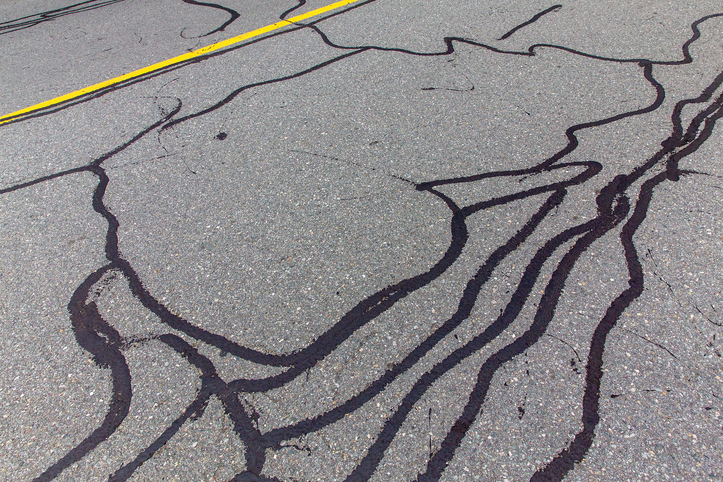
A few small cracks are normal wear on any asphalt surface. What matters is whether they’re getting longer, wider, or connecting into a web-like pattern known as alligator cracking. Cracks let water seep beneath the pavement, and once water reaches the base layer, it weakens the ground the asphalt sits on. In Phoenix, the swing between intense summer heat and sudden monsoon downpours can make cracked pavement deteriorate faster. Isolated linear cracks that widen season to season are what crack sealing is for. Interconnected or alligator cracking is a different problem: the pattern means the layers underneath have started to fail, and sealing over the top does not reach the cause. That one calls for removing the failed material and replacing it.
Potholes, Even Small Ones
A pothole is usually what happens after a crack has let water do its damage long enough to break the surface apart. Once you see even a small pothole, it often means the pavement underneath has already weakened. Potholes also create liability concerns. They can damage vehicles, cause trips and falls, and make a property look neglected. New potholes, especially several appearing in the same season, point to a repair need rather than something to patch once and forget.
Standing Water After Rain
A well-graded parking lot sheds water after rain rather than holding it. If you notice puddles that linger, especially in the same spots every time, the pavement has likely settled or lost its slope in that area. Standing water speeds up other kinds of pavement damage because it keeps soaking into cracks and joints. Drainage problems are one of the more overlooked signs of an aging lot, but persistent puddling is a signal worth acting on.
Faded or Missing Line Striping
This one is more about function and compliance than structural damage, but it’s easy to spot. Faded striping makes it harder for drivers to see lanes, parking spaces, and ADA-accessible spots, which can create safety and compliance issues. If your striping is difficult to see in daylight, or accessible parking markings have worn away, restriping is worth doing on its own or as part of a larger repair project.
Crumbling or Raveling Edges
Raveling is when small pieces of aggregate start breaking away from the asphalt surface, leaving it rough and crumbly instead of smooth. It often starts at the edges of the lot or around drains and curbs, where the pavement gets less support. Raveling usually means the asphalt binder is aging or the surface wasn’t sealed and maintained on schedule. Left alone, it spreads and shortens the life of the whole surface.
Low Spots, Sinking, or Rutting
Depressions or rutting, especially in drive lanes and loading zones that see heavy or repeated traffic, usually point to a problem below the surface rather than just wear on top. This can happen when the base material shifts, settles, or wasn’t compacted properly to begin with. These low spots collect water and put extra stress on the surrounding pavement, so they tend to get worse rather than better on their own.
Sealcoat That’s Worn Thin, Faded, or Gone
Sealcoating protects asphalt from sun, oil, and water, but it wears down over time, especially under strong UV exposure. If your pavement has turned gray instead of black, or you can see the aggregate showing through in high-traffic areas, the protective layer is gone. That doesn’t always mean the pavement is damaged yet, but it does mean it’s unprotected, which makes it a good time to have it evaluated before smaller problems turn into bigger ones.

Gray instead of black
A gray surface has lost its protective layer, but that is not all it can mean. Oxidation and early raveling look much the same from a distance, so the surface has to be inspected before anyone decides sealcoating is the right answer rather than a repair.
What These Signs Actually Mean
Not every sign on this list calls for the same repair. A few isolated cracks might only need crack sealing. Potholes and raveling usually call for patching. Interconnected cracking, rutting and low spots are a different category, because they point to the base rather than the surface. A base that has failed has to be removed and replaced to full depth, with drainage or grading corrected where water is the cause. An asphalt overlay resurfaces what is underneath it, so it is the right answer for a worn surface on a sound base and the wrong one for a base that has already gone. That’s why the most useful next step is a professional assessment of what’s happening below the surface.
| What you are seeing | What it usually points to |
|---|---|
| Isolated linear cracks, widening | Crack sealing |
| Interconnected or alligator cracking | Removal and replacement of the failed material, not a seal over the top |
| Potholes | Patching |
| Standing water in the same spots | Settled pavement or lost slope. Grading or drainage correction, and full-depth repair where the base has gone |
| Faded or missing striping | Restriping, on its own or with a larger repair |
| Raveling, crumbling edges | Patching |
| Low spots or rutting | A failed base or subgrade. Full-depth removal and replacement, with drainage or grading corrected where water is the cause |
| Sealcoat gone, surface turned gray | An inspection first. Sealcoating only if the surface underneath turns out to be sound |
YSC Paving has 25 years paving commercial properties across the Phoenix metro, so we’ve seen how quickly small issues turn into larger repairs once Arizona heat and monsoon storms get involved. Our parking lot repair team can identify which of these signs apply to your property and recommend the right level of repair, whether that’s targeted patching, crack sealing, or resurfacing.
Why It’s Worth Addressing Early
Pavement damage doesn’t stay the same size. Cracks widen, potholes multiply, and low spots collect more water over time.
Addressing issues while they’re still isolated is typically a smaller, more affordable project than waiting until the damage covers a larger area or reaches the base layer. A regular parking lot maintenance program, including routine asphalt maintenance like sealcoating and crack sealing, is one of the most effective ways to catch these signs before they turn into expensive repairs.
Walk your lot with us
We will go through the list above on your property and tell you which signs are present, which ones can wait, and what each fix involves.
FAQs
It depends on how much of the lot is affected and what’s happening beneath the surface. Isolated cracks or a single pothole can often be patched. Widespread cracking, multiple low spots, or repeated pothole formation across the lot are signs the base may be compromised. A compromised base has to be removed and replaced to full depth, because resurfacing over it covers the problem rather than repairing it. A site inspection is the most reliable way to tell the difference.
Store-bought crack fillers and cold patch can offer a short-term fix for very minor damage, but they aren’t the same materials or application a contractor uses. Treat them as a stopgap rather than a repair, and tell whoever inspects the lot where they were used.
There is no single schedule that suits every property. What matters is that somebody looks at the lot on a regular basis, and again after anything that could have damaged it, such as a heavy monsoon storm. Catching a defect while it is still small is what keeps the repair small.

About YSC Paving
YSC Paving has 25 years paving commercial properties across the Phoenix metro. We handle grading, paving, patching, crack sealing, sealcoating, and parking lot maintenance for retail centers, HOAs, schools, distribution centers, and property managers.
Where to go next
Related services
Parking Lot Repair
Patching, crack sealing, and targeted repairs for damage that is already showing.
See the serviceCrack Sealing
Seal cracks before water reaches the base and turns them into potholes.
See the serviceSealcoating
Restore the protective layer that Arizona sun strips off over time.
See the serviceParking Lot Maintenance
A recurring schedule so these signs get caught while they are still cheap.
See the serviceLet’s walk your site
It costs nothing, and you leave with the scope in writing. Tell us the property and we’ll find a time.